
Yamaha Challenges YMHLUBE PRO Trademark in Indonesia
Analysis of Yamaha’s trademark dispute against YMHLUBE PRO before Indonesia’s Commercial Court and its implications for well-known trademark protection and enforcement.
2/16/20264 min read
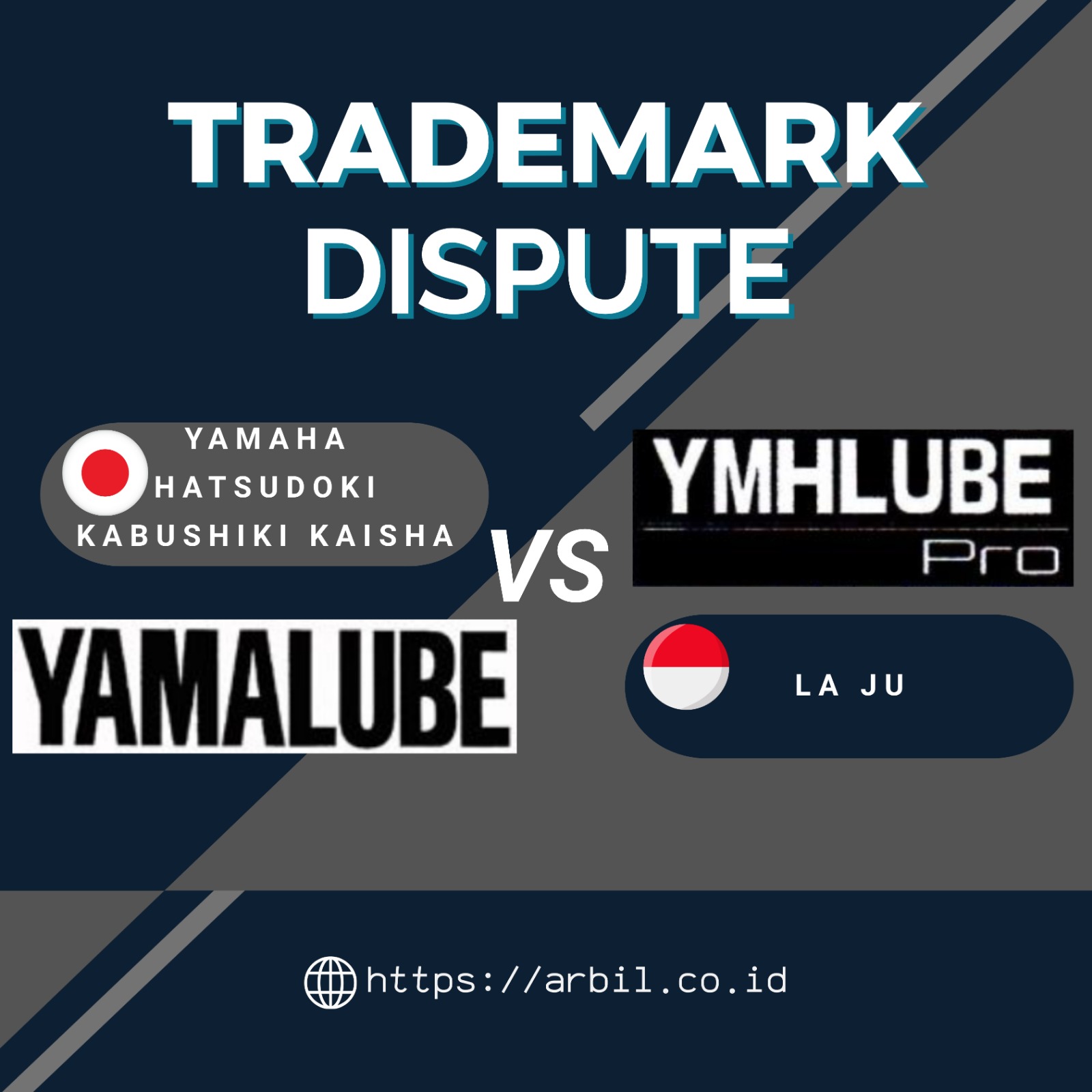
Yamaha Hatsudoki Kabushiki Kaisha (“Yamaha”), a globally recognized Japanese multinational corporation and one of the world’s leading motorcycle manufacturers, has initiated trademark cancellation proceedings against several registrations incorporating the element “YMHLUBE PRO” owned by an Indonesian individual, LA JU. The case, registered under Case No. 9/Pdt.Sus-HKI/Merek/2026/PN Niaga Jkt.Pst, is currently being examined by the Commercial Court at the District Court of Central Jakarta. This action reflects a strategic enforcement effort by a well-known trademark owner to preserve the integrity of its brand and prevent the registration and continued existence of marks that may dilute its distinctive identity or create an unauthorized association in the marketplace.
The Plaintiff is the lawful owner of the YAMALUBE trademark in Indonesia, registered under Registration No. IDM000235273 in Class 4, covering lubricants. The YAMALUBE mark has been extensively and continuously used in connection with Yamaha’s motorcycle products and related maintenance ecosystem. As a manufacturer with a dominant presence in the Indonesian automotive market, Yamaha has established significant goodwill and consumer recognition associated with its core trademarks, including YAMAHA and its derivative marks such as YAMALUBE. Within the relevant consumer segment, YAMALUBE functions not only as a commercial identifier but also as a symbol of product compatibility, reliability, and manufacturer endorsement, reinforcing its strong distinctive character and reputation.
The Defendant is recorded as the owner of several trademarks incorporating the dominant element “YMHLUBE” including YMHLUBE PRO under Registration No. IDM000943801 in Class 4, YMHLUBE PRO under Registration No. IDM001212628 in Class 1, and INFINEX YMHLUBEPRO under Registration No. IDM000660039 in Class 4. The incorporation of the element “YMHLUBE” as the central and dominant component of these trademarks lies at the heart of the present dispute. Given the structural, phonetic, and conceptual proximity between “YMHLUBE” and the Plaintiff’s “YAMALUBE” mark, particularly in connection with lubricant products within the same or closely related classes, the contested registrations raise substantial legal questions under Indonesian trademark law.
Under the Indonesian Trademark Law, specifically Article 21 paragraph (1) letters b and c of Law No. 20 of 2016 concerning Trademarks and Geographical Indications, a trademark application must be refused, or an existing registration may be cancelled, where the mark is identical with or similar in its essential part to a prior registered trademark or a well-known trademark owned by another party, particularly in relation to similar goods or services. The legal standard for similarity under Indonesian law does not require exact replication but instead focuses on whether the overall impression created by the marks is sufficiently similar to create a likelihood of confusion among relevant consumers. This assessment considers the visual, phonetic, and conceptual characteristics of the marks, with particular emphasis on the dominant and distinctive elements that shape consumer perception.
In the present case, the similarity between YAMALUBE and YMHLUBE appears legally significant. From a phonetic standpoint, the omission of certain vowels in “YMHLUBE” does not materially alter the dominant phonetic structure, which remains closely aligned with the sound and rhythm of “YAMALUBE.” Indonesian courts have consistently recognized that minor orthographic variations do not necessarily eliminate similarity where the dominant phonetic impression remains comparable. Conceptually, both marks incorporate the element “LUBE,” which directly refers to lubricants, reinforcing the association between the marks within the automotive lubricant sector. Furthermore, the coexistence of the contested marks and the Plaintiff’s trademark within Class 4, covering identical goods, substantially increases the risk that consumers may reasonably assume a commercial relationship, authorization, or affiliation between the Defendant’s products and Yamaha.
In addition to similarity, the case may also engage the legal doctrine of bad faith registration, as governed by Article 21 paragraph (3) of Law No. 20 of 2016. Under Indonesian trademark jurisprudence, bad faith may be inferred where a trademark applicant registers a mark with knowledge of an existing mark belonging to another party, particularly where that mark has achieved substantial recognition, and adopts elements of the earlier mark in a manner that suggests an intention to benefit from its reputation or goodwill. The fact that the Defendant holds multiple registrations incorporating the same dominant element “YMHLUBE” may reinforce the inference that the registrations were not coincidental but rather reflect a deliberate pattern of adopting elements closely resembling the Plaintiff’s established mark. Given Yamaha’s longstanding commercial presence and extensive brand recognition in Indonesia, it would be difficult to argue that the existence of the YAMALUBE mark was unknown at the time of filing the contested applications.
Indonesian trademark law also provides enhanced protection to well-known marks, reflecting Indonesia’s obligations under international agreements, including the Agreement on Trade-Related Aspects of Intellectual Property Rights (TRIPS). Indonesian Commercial Courts have demonstrated an increasing willingness to safeguard well-known trademarks against unauthorized imitation, particularly where the contested marks may create a false impression of association or endorsement. In this context, the close association between YAMALUBE and the highly recognized YAMAHA brand strengthens the Plaintiff’s legal position, as derivative marks that are intrinsically linked to well-known parent brands often benefit from broader protection against imitative registrations.
This case carries significant implications for trademark owners operating in Indonesia, particularly multinational companies whose brand value depends heavily on maintaining exclusive control over distinctive brand elements. A decision in favor of the Plaintiff would reinforce Indonesia’s legal framework as one that effectively protects well-known trademarks against imitative registrations and bad faith filings. Such an outcome would also serve as an important reminder that attempts to appropriate elements of established trademarks, particularly within the same industry sector and for identical goods, are unlikely to withstand judicial scrutiny under Indonesian law.
The proceedings remain ongoing before the Commercial Court at the District Court of Central Jakarta, and the eventual decision will be closely observed by trademark practitioners, brand owners, and intellectual property professionals, both domestically and internationally. The outcome is expected to contribute further clarity to the legal standards governing similarity, bad faith, and the protection of well-known trademarks within Indonesia’s evolving intellectual property landscape.
As an Indonesia-based intellectual property law firm with extensive experience in trademark protection, enforcement, and dispute analysis, ARBIL & Co. regularly monitors and evaluates key trademark developments before Indonesian courts. For further discussion or consultation regarding intellectual property protection and enforcement strategies in Indonesia, you are invited to contact ARBIL & Co. at info@arbil.co.id. Our firm provides strategic legal analysis, risk assessment, and comprehensive legal support tailored to the needs of international and domestic rights holders seeking to secure and enforce their intellectual property rights in Indonesia.
Get in touch with us
We provide reliable legal solutions.
CONSULTATION
Contact Us
info@arbil.co.id
+62 8 99999 6160
© 2025. All rights reserved.
Jl. M.H. Thamrin No. 12, Lantai 5 Unit A.6, RT. 2 / RW. 1, Kebon Sirih, Menteng, Jakarta Pusat, DKI Jakarta 10340 - Indonesia
By submitting this form, you agree to receive marketing communications, including newsletters, promotions, and offers, from ARBIL & Co. We respect your privacy and will never share your information with third parties. You can unsubscribe at any time by clicking the "unsubscribe" link in any email we send