
LATTAFA Trademark Loss and Cassation in Indonesia
Case note on LATTAFA’s failed trademark cancellation suit in Jakarta and its cassation to Indonesia’s Supreme Court, analysing first-to-file, well-known marks and bad faith.
11/22/20257 min read
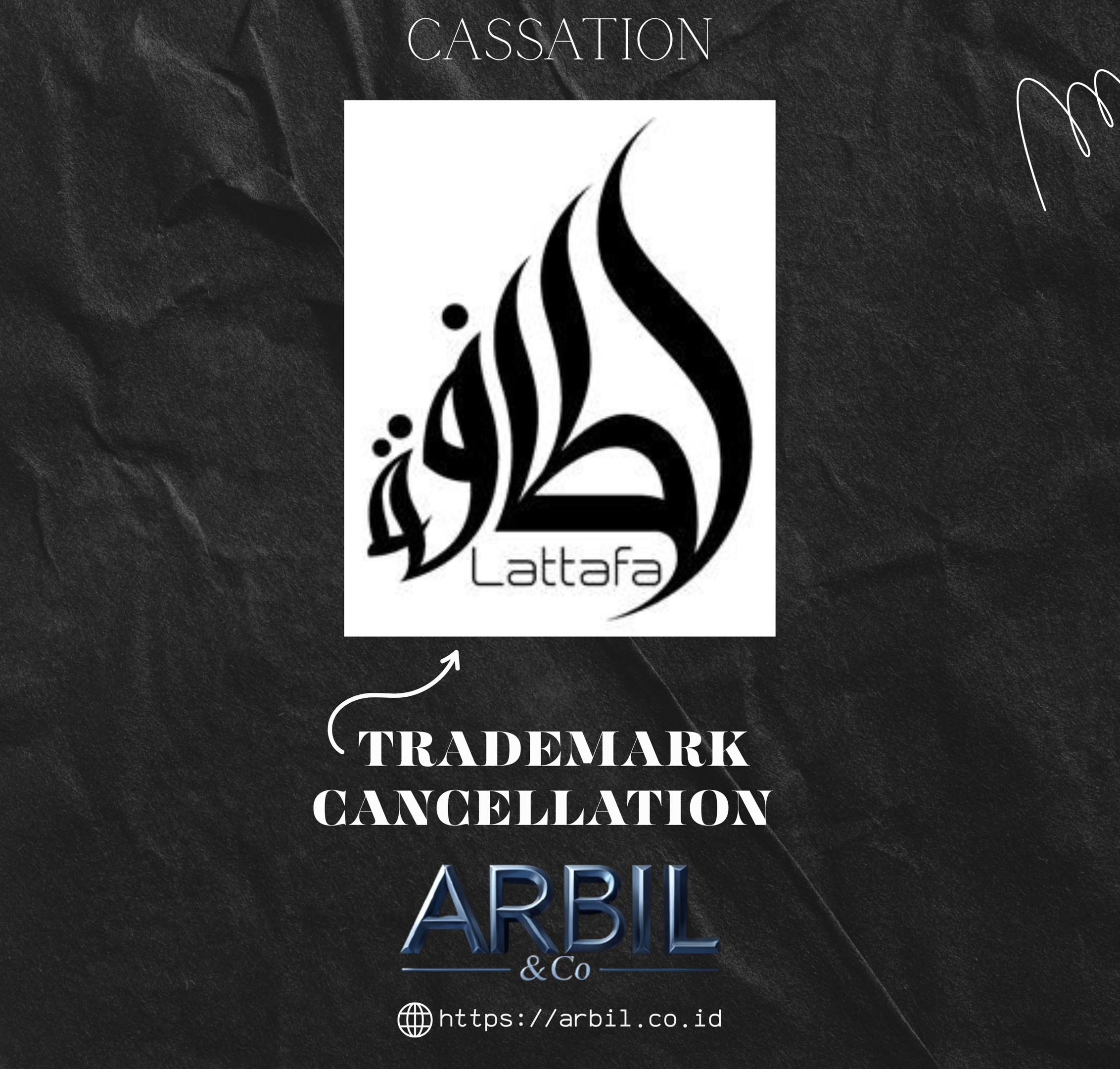
The trademark dispute between LATTAFA PERFUMES INDUSTRIES LLC and Nishaan John Dilip Dodani in Indonesia has entered a strategically significant phase. On 29 September 2025, the Commercial Court at the Central Jakarta District Court rejected in full LATTAFA’s lawsuit seeking cancellation of the defendant’s trademarks. In response, LATTAFA has now brought the case to the Supreme Court of the Republic of Indonesia by way of Cassation. This dispute is noteworthy because it brings together several core issues of Indonesian trademark law: the operation of the first-to-file principle, the evidentiary demands for establishing a well-known mark, and the contours of bad faith in local trademark filings by domestic proprietors.
The dispute originates from a lawsuit filed on 10 June 2025, in which LATTAFA challenged the registration of “LATTAFA + Logo” marks in Class 3 and Class 35 in the name of Nishaan John Dilip Dodani. The contested registrations are IDM000771164 in Class 3, with a registration date of 29 May 2020, and IDM001291105 in Class 35, with a registration date of 26 February 2025. LATTAFA asserted that it is the first user and first filer globally of the LATTAFA mark, used and registered since 2007 in the United Arab Emirates and subsequently extended to numerous jurisdictions worldwide. It further argued that the sign “LATTAFA” is identical to its corporate name, LATTAFA PERFUMES INDUSTRIES LLC, and therefore functions not only as a trademark but also as a direct representation of the company’s identity.
From a substantive perspective, LATTAFA alleged that the defendant’s marks registered in Indonesia are identical or confusingly similar to LATTAFA’s well-known mark and that their registration should have been refused and, alternatively, cancelled under Articles 21 and 77 of Law No. 20 of 2016 on Trademarks and Geographical Indications. Alongside the similarity of the marks, LATTAFA also framed the dispute as a bad faith case, positioning the defendant as a party allegedly attempting to free-ride on the reputation of a brand that already enjoys a broad international filing portfolio. At the same time, LATTAFA pointed to its own trademark filing efforts in Indonesia, through several pending applications in Class 3 and Class 35, as proof of good faith and alignment with Indonesia’s first-to-file regime.
Significantly, in its statement of claim LATTAFA also requested the Court to declare that its pending trademark applications, namely DID2025011994 (Class 3, 10 February 2025), JID2024131205 (Class 35, 12 December 2024), and JID2024133669 (Class 35, 18 December 2024), had been filed in good faith and therefore “deserve to be registered” at the Directorate of Trademarks and Geographical Indications. From a doctrinal perspective under Indonesian trademark law, such a petitum is structurally difficult for the Commercial Court to grant. The assessment of whether a trademark application meets the substantive requirements for registration lies within the administrative authority of the Directorate of Trademarks and Geographical Indications and is implemented through a substantive examination procedure. In other words, in the context of a cancellation action, the Court is not institutionally positioned to pre-empt or substitute the discretion of the Trademark Office by declaring that specific pending applications ought to be registered, because that question is subject to technical and administrative scrutiny rather than judicial adjudication. In practice, requests that invite the court to step into the realm of administrative discretion of the IP Office are typically regarded as overreaching the court’s jurisdiction. It is therefore unsurprising if such petitum cannot be granted, even though the court may still evaluate good faith as part of its ratio decidendi in resolving the dispute between the parties.
The Commercial Court’s decision to reject LATTAFA’s claim in its entirety and to order the plaintiff to pay court fees of IDR 708,000 marks a critical turning point in the dispute. Methodologically, this outcome cannot be taken as definitive evidence of the judges’ exact reasoning because, absent a detailed analysis of the written decision, one cannot identify with certainty which legal grounds were determinative. However, from a doctrinal and practical perspective in Indonesian court practice, cancellation actions of this nature usually revolve around two clusters of legal issues. The first concerns whether the plaintiff has successfully established that its mark qualifies as a well-known mark within the meaning of Article 21 (1) (b). The second concerns whether allegations of bad faith at the time of the local filing can be proven through positive and concrete evidence.
Doctrinally, Indonesia adheres to a first-to-file system, as reflected in Article 3 of Law No. 20 of 2016. This means that trademark rights are, as a rule, granted to the party that first files a valid application, rather than to the party that merely claims prior use in fact. This principle provides a strong foundation for local filers such as Nishaan John Dilip Dodani, provided their applications satisfy the formal and substantive requirements and are not caught by absolute or relative grounds of refusal. However, the first-to-file principle in Indonesia is not absolute. The Trademark Law expressly creates space for the protection of well-known marks and offers mechanisms to refuse or cancel registrations obtained in bad faith. This is precisely where the LATTAFA case becomes so instructive, because it situates a global brand’s claim to reputational priority against the formal rights of a local registrant who has relied on the national registration system.
With respect to well-known marks, Indonesian courts typically employ a multi-factor assessment. A brand’s global reputation does not automatically translate into well-known status within Indonesia if there is no evidence that is relevant to the local market. In practice, judges will look at whether there has been use of the mark, the extent of public recognition which can be demonstrated through media exposure, marketplace presence, or consumer awareness, the scope and quality of promotional and marketing activities that can be documented, such as advertising campaigns, digital marketing initiatives, and distribution arrangements, the nature and volume of sales or distribution that indicate market penetration. A broad portfolio of registrations in multiple countries is usually treated as corroborative evidence of global reputation rather than the sole and decisive factor. Accordingly, from the standpoint of Indonesian positive law, the fact that LATTAFA has been used and registered for many years in numerous jurisdictions does not, by itself, guarantee that it will be classified as a well-known mark in Indonesia. The global profile of the brand must still be translated into evidence specific to the Indonesian market.
On the bad faith side, the evidentiary bar is similarly demanding. As a matter of Indonesian court practice, judges are generally not persuaded by similarity of names or logos alone. They expect positive and concrete evidence that the local filer acted with dishonesty or improper intention. Indicators frequently scrutinised include the existence of prior business, distributorship, or contractual relations between the parties demonstrating that the local filer had direct knowledge of the foreign mark, patterns of deliberate imitation of marks with an established reputation, evidence of attempts to free-ride on the goodwill and brand equity of others, or a recurrent pattern of filing multiple third-party marks consistent with a trade mark squatter profile. If such indicators are absent or weak in the evidentiary record, cancellation claims grounded in bad faith typically face serious obstacles. This description reflects broader doctrinal and practice trends in Indonesia and is not a statement that the panel in LATTAFA necessarily relied on the same set of reasons, given that the full written judgment is not analysed here.
At the cassation stage, the legal battleground shifts in character. The Supreme Court does not function as a trier of fact but as a court of law. Its central role is to assess whether the Commercial Court misapplied the law, whether it erred in interpreting statutory provisions, or whether it exceeded or failed to exercise its jurisdiction as circumscribed by procedural law. In the specific context of the LATTAFA dispute, potential issues for Supreme Court review include whether the evidentiary standard for well-known marks was applied correctly and consistently with the Trademark Law and recent jurisprudence, whether the first-instance court accorded appropriate weight to LATTAFA’s international reputation and to the evidence relevant to Indonesia, whether the assessment of bad faith is aligned with Indonesian doctrinal developments and case law in similar disputes, and whether Articles 21 and 77 were properly applied, particularly regarding similarity in essence and the legal consequences of registrations that allegedly infringe prior rights.
From a litigation strategy standpoint, LATTAFA, as the Cassation Petitioner, does bring certain argumentative assets to the table. Its long-standing global filing history since 2007, the unity between its corporate name and house mark, and the fact that the defendant’s Indonesian registrations are comparatively recent all combine into a powerful commercial narrative. There have also been Supreme Court decisions in the past where foreign brands with strong reputations received protection, even where their actual use in Indonesia was not as extensive as in other markets. However, persuasive commercial narratives do not always translate into strong legal positions at the cassation level. LATTAFA’s main challenge is that the Supreme Court generally shows deference to factual findings made by the lower court. The burden on LATTAFA, therefore, is not simply to argue that the facts should be viewed differently, but to demonstrate that there has been a genuine error in the application of law.
Conversely, from the perspective of the Cassation Respondent, Nishaan John Dilip Dodani, the first-to-file position in Indonesia provides a relatively robust foundation, assuming the registrations are not proven to conflict with a well-known mark or to have been obtained in bad faith. If the Supreme Court does not find any significant misapplication of law at first instance, the default tendency is to uphold the Commercial Court’s decision. The delicate balance between protecting local registrants and honouring the rights of well-known foreign marks sits at the heart of this case and will be tested in the Supreme Court’s eventual judgment.
Given the complexity of the legal and factual dynamics in a dispute like LATTAFA, the analysis in this article is intended to offer a general overview of doctrinal tendencies and court practice in Indonesia, rather than a case-specific legal opinion. Each dispute will exhibit its own factual matrix and strategic considerations, and solutions that appear appropriate in one scenario may not be transferrable to another. Accordingly, any reliable assessment requires a tailored review of the underlying documents, the evidence available, and the commercial objectives of the parties involved.
ARBIL & Co., drawing on its experience in cross-border trademark disputes and proceedings before both the Commercial Courts and the Indonesian IP Office (DGIP), is well placed to assist foreign and local trademark owners in evaluating risk and designing the most appropriate course of action. For case-specific discussions or strategic assessments, readers are welcome to contact info@arbil.co.id.
For foreign brand owners and international trademark attorneys, the LATTAFA case delivers several strategic lessons on managing trademark risk in Indonesia. In a strict first-to-file environment, litigation built on well-known mark claims and bad faith allegations requires a carefully constructed evidentiary strategy grounded in doctrine and practice, rather than reliance on global reputation alone. The Supreme Court’s eventual cassation decision in this matter will likely become one of the key reference points in the evolving landscape of trademark protection in Indonesia. It will shed further light on the extent to which international reputation influences the interpretation of well-known marks under Indonesian law, how the evidentiary standard for bad faith is reinforced at the highest judicial level, and how far protection for famous marks can limit the rights of local registrants within a first-to-file system. For international businesses, the outcome will serve as an important barometer for designing filing strategies, enforcement approaches, and risk mitigation frameworks in the Indonesian market.
Get in touch with us
We provide reliable legal solutions.
CONSULTATION
Contact Us
info@arbil.co.id
+62 8 99999 6160
© 2025. All rights reserved.
Jl. M.H. Thamrin No. 12, Lantai 5 Unit A.6, RT. 2 / RW. 1, Kebon Sirih, Menteng, Jakarta Pusat, DKI Jakarta 10340 - Indonesia
By submitting this form, you agree to receive marketing communications, including newsletters, promotions, and offers, from ARBIL & Co. We respect your privacy and will never share your information with third parties. You can unsubscribe at any time by clicking the "unsubscribe" link in any email we send